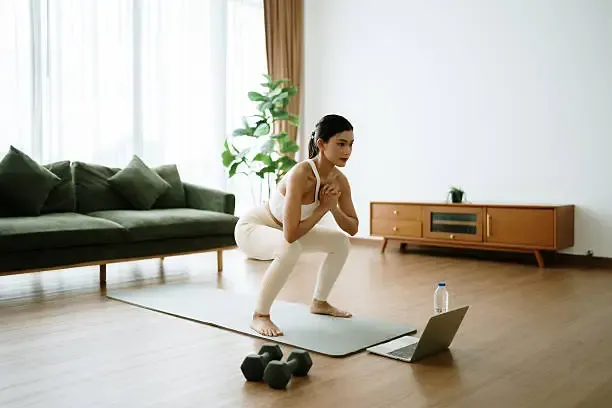
Strength Training in Perimenopause and Menopause: An 8-Week Beginner Plan
Menopause changes muscle, bone and energy, and strength training helps. Get a safe eight-week beginner plan, what the research suggests and how to start at home.
This article may contain affiliate links. If you buy through them we may earn a commission at no extra cost to you. Learn more
For many women, the years around menopause bring a confusing mix of changes: shifts in energy and sleep, a softer waistline, joints that feel stiffer and a nagging sense that the body no longer responds the way it used to. In the United States and India alike, midlife women's health is finally getting attention, and one message keeps coming up in fitness research and coaching: strength training matters more than ever. The ACSM's 2026 fitness trends list also highlights strength training as a consistent top trend and notes that fewer than a third of adults meet muscle-strengthening guidelines. This guide explains why resistance training helps during perimenopause and menopause, and gives a beginner-friendly eight-week plan. It is general information, not medical advice.
What Changes in Midlife
As oestrogen levels fall around perimenopause and menopause, the body goes through several changes that exercise can influence. Muscle mass and strength tend to decline with age, a process called sarcopenia, and it can speed up in midlife if you are inactive. Bone density also drops faster in the years around menopause, which raises the risk of osteoporosis later. Body fat tends to shift toward the abdomen, and many women notice changes in sleep, mood and energy. None of these changes are your fault, and none mean you should stop being active. They are good reasons to start strength training.
What the Research Suggests
Reviews of research in midlife and postmenopausal women generally find that resistance training is associated with better muscle mass, strength and physical function, and that it can help preserve or modestly increase bone mineral density at sites such as the spine and hip. Heavier loads, roughly 70 to 85 percent of the maximum you can lift once, tend to give the strongest bone response, while very light loads have a limited effect. Studies vary in design, and results are not identical for everyone, so it is best to see strength training as a powerful, well-supported habit rather than a guaranteed cure.
There is no single official frequency, but most coaches and reviews suggest two to three full-body sessions a week, with rest days in between. That is a realistic starting point.
Before You Start: A Few Safety Notes
- Talk to your doctor if you have heart disease, high blood pressure, osteoporosis, joint problems, recent surgery or any other medical condition, or if you are unsure whether to start.
- Ask about bone health. If you are over 50 or have risk factors for osteoporosis, your doctor may suggest a bone density scan. People with osteoporosis need to learn safe technique and may need to avoid certain movements, such as deep spinal flexion or twisting under load.
- Start light and learn the movements. Heavier loads are better for bone, but build up gradually. Consider a few sessions with a qualified trainer to learn technique.
- Stop if you feel sharp pain, dizziness or chest discomfort and seek medical advice.
What You Need
You can begin with very little. A pair of adjustable dumbbells, a set of resistance bands, a sturdy chair, a mat and your own body weight are enough for the first two months. A bench or a stable step is helpful but not essential. Wear supportive shoes, and train on a non-slip surface.
The Eight-Week Beginner Plan
Train two or three days a week, with at least one rest day between sessions. Begin each session with five minutes of easy marching, arm circles and gentle squats. Use a weight that lets you complete the repetitions with good form and feel that the last two are challenging.
Workout A (Lower Body Focus)
- Chair squats or goblet squats: 2 to 3 sets of 8 to 12.
- Glute bridges: 2 to 3 sets of 10 to 15.
- Romanian deadlifts with light dumbbells: 2 to 3 sets of 8 to 10.
- Step-ups on a low, sturdy step: 2 sets of 8 per leg.
- Calf raises holding a wall: 2 sets of 12 to 15.
Workout B (Upper Body and Core Focus)
- Wall or incline push-ups: 2 to 3 sets of 8 to 12.
- One-arm dumbbell rows or banded rows: 2 to 3 sets of 8 to 12 per side.
- Seated shoulder press with light dumbbells: 2 sets of 8 to 10.
- Bird-dog or dead bug: 2 sets of 8 per side.
- Plank on knees or toes: 2 sets of 20 to 40 seconds.
Progression
- Weeks 1 and 2: learn the movements with light weights, two sessions a week.
- Weeks 3 and 4: add a third session if you recover well, or add a set to each exercise.
- Weeks 5 and 6: increase the weights slightly when you can complete all sets comfortably, and slow the lowering phase to three seconds.
- Weeks 7 and 8: aim for heavier weights in a range of about 6 to 10 repetitions on the big lifts, if your doctor and technique allow, and keep one lighter day.
Write down what you do, because seeing small improvements is motivating.
Warm-Up and Cool-Down
A good warm-up prepares joints and muscles and lowers the chance of injury. Spend five to eight minutes on easy marching, shoulder rolls, hip circles, cat-cow on hands and knees, bodyweight squats and a few light repetitions of the first exercise. Finish each session with three to five minutes of gentle stretching for the calves, hamstrings, hip flexors, chest and back, and a few slow breaths. This is particularly helpful when joints feel stiff in the morning, and it makes the session feel better.
Tracking Progress and Knowing When to Progress
Progress in midlife strength training is steady, not dramatic, and it shows up in small ways. Keep a simple log of the exercises, weights, repetitions and how each session felt. When you can complete all sets at the top of the repetition range with good form, increase the weight slightly or add a set. Take a measurement or a photo every four weeks, but pay equal attention to function: carrying shopping, climbing stairs, getting up from a low seat and sleeping well. If you feel unusually tired or sore for more than two days, reduce the load for a week, because recovery slows as we age.
Think Strength, Not Appearance
Many women come to exercise in midlife focused on the scale or on shrinking, and it is easy to feel discouraged when weight shifts despite effort. Try measuring success by capability instead: how much you can lift, how steady you feel on your feet and how well you recover. A stronger body supports independence, balance and bone health for decades, and that is a goal worth training for. Celebrate each small gain, find a friend or an online community to train with and be patient with yourself.
Add a Little Balance and Impact, Safely
Bone responds to load and to impact. Brisk walking, stair climbing and, if your joints and doctor agree, a small amount of low-impact hopping or stepping down from a low step can add stimulus. Balance training, such as standing on one leg while brushing your teeth, helps prevent falls. Introduce impact gradually and skip it if you have osteoporosis, joint pain or pelvic floor symptoms without guidance.
Food, Protein and Recovery
Your muscles need raw materials. Many experts suggest spreading protein across meals, with a source at each meal, such as dal, paneer, curd, eggs, tofu, fish or chicken. Calcium and vitamin D support bone health, and your doctor can check your vitamin D levels. Omega-3 fats from fish, flax or walnuts and plenty of vegetables and fibre round out a supportive diet. Our guides to vegetarian protein sources and omega-3 for women give practical ideas. Sleep, which can be disrupted around menopause, also affects recovery, so protect your bedtime routine.
Supplements: What to Think About
Creatine is one supplement that has attracted interest among midlife women because of its link to strength and lean mass, although research is still developing. Our guide to creatine for women covers who should be cautious. Always talk to your doctor before starting any supplement, particularly if you take hormone therapy or other medicines, and remember that no supplement replaces training, protein and sleep.
What About Hot Flushes, Joint Pain and Low Motivation?
Training through menopause symptoms takes flexibility. If hot flushes are bothering you, exercise in a cool room, wear breathable clothing and keep water close. If your joints ache, choose exercises that feel comfortable, reduce range of motion and warm up thoroughly. If your motivation is low, shorten the session instead of skipping it: even 20 minutes counts. Pelvic floor symptoms, such as leaking or heaviness, are common, and a pelvic health physiotherapist can help you train safely. Persistent or severe symptoms are worth discussing with your doctor, who can talk through options including hormone therapy and other treatments.
Menopause and Strength Training: Common Questions
Is it too late to start lifting weights in my 50s or 60s?
No. Studies show that older adults, including women well past menopause, can gain strength and muscle with resistance training. Start gently, learn technique and progress gradually.
Will lifting weights make me bulky?
Building a large amount of muscle takes years of heavy training and a large calorie surplus. Most women notice a firmer, stronger body and better function, not bulk.
How heavy should I lift?
Choose a weight that lets you complete your repetitions with good form while the last two feel challenging. As you gain experience, heavier loads are helpful for bone, but build up slowly and consider guidance from a trainer.
Can strength training help with weight changes around menopause?
It helps maintain and build muscle, which supports metabolism and function. Weight itself depends on diet, sleep and overall activity, so combine training with good habits.
Should I do cardio as well?
Yes. Heart health matters in midlife. Combine strength training with regular walking or other moderate cardio, and aim for around 150 minutes of moderate activity a week if your doctor agrees.
Written by Admin User
Part of the MiraFit editorial team, sharing practical fitness, wellness and lifestyle advice. Content is for general information and is not medical advice.